After everything home insurance doesn’t cover, there are times it actually works.
Claims that get approved. Repairs that get paid. People who are genuinely helped. The difference between a paid claim and a denial is not luck, and it isn’t how bad the damage looks. It comes down to a few specific rules most homeowners never hear explained.

What Is Covered By House Insurance
Let’s look at what home insurance actually does cover, and when it truly pays out.
You’ll learn here:
- Events covered by insurance
- Why sudden beats expensive
- How adjusters approve claims
- Damage vs cause matters
- Predict approval before filing
This isn’t theory. It’s how claims are actually evaluated.
Insurance Was Never Meant To Cover Everything
After hearing everything insurance doesn’t cover, it’s easy to assume the system is broken.
It isn’t. It’s just misunderstood.
Home insurance was never designed to be a blanket solution for every problem a house can have. It isn’t a maintenance plan, and it isn’t a guarantee against aging, wear, or long-term issues.
It exists for a much narrower purpose.
Insurance is meant to transfer specific risks and not eliminate risk entirely.
That’s why policies are built around events, not conditions. Around moments, not timelines. Around sudden disruptions, not slow deterioration.
When homeowners assume insurance should step in for anything expensive or stressful, disappointment is almost guaranteed. Not because the insurer is being unfair, but because the expectation was never aligned with the contract.
Exclusions aren’t hidden as a trick. They exist because if insurance covered everything with every slow leak, every crack, every aging component, premiums would be unaffordable.
So instead, insurance draws a hard line.
On one side: sudden, accidental events that cause direct damage.
On the other: gradual problems, maintenance issues, and predictable failures.
Once you understand that line, coverage stops feeling random. Claims don’t feel arbitrary. And most importantly, you can start predicting with surprising accuracy, when insurance will actually pay.
The Three Concepts That Get Claims Paid
If you strip home insurance down to its core, almost every approved claim passes through the same filter.
Three concepts here included are…
- Sudden.
- Accidental.
- Direct physical loss.
These aren’t marketing phrases. They’re legal triggers.
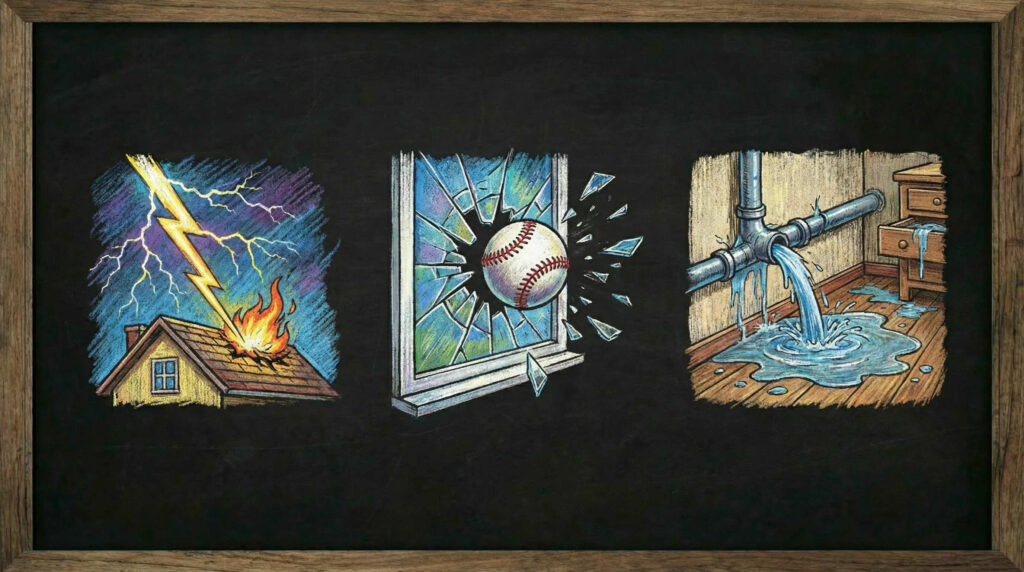
Sudden means the damage happened quickly and not over weeks, months, or years. An event you can point to. A moment where something changed.
Accidental means it wasn’t expected or intended. Not something you planned, ignored, or allowed to continue once it was obvious.
And direct physical loss means there is actual, tangible damage as with something broken, burned, soaked, or destroyed. Not inconvenience. Not wear. Not a future risk.
When adjusters review a claim, they aren’t asking, “How bad is this?”
They’re asking, “Does this meet those three conditions?”
- A fire checks all three.
- A burst pipe usually does.
- A tree crashing into a roof does.
But a slow leak fails the “sudden” test.
Rot fails the “accidental” test.
And cosmetic issues often fail the “direct loss” test.
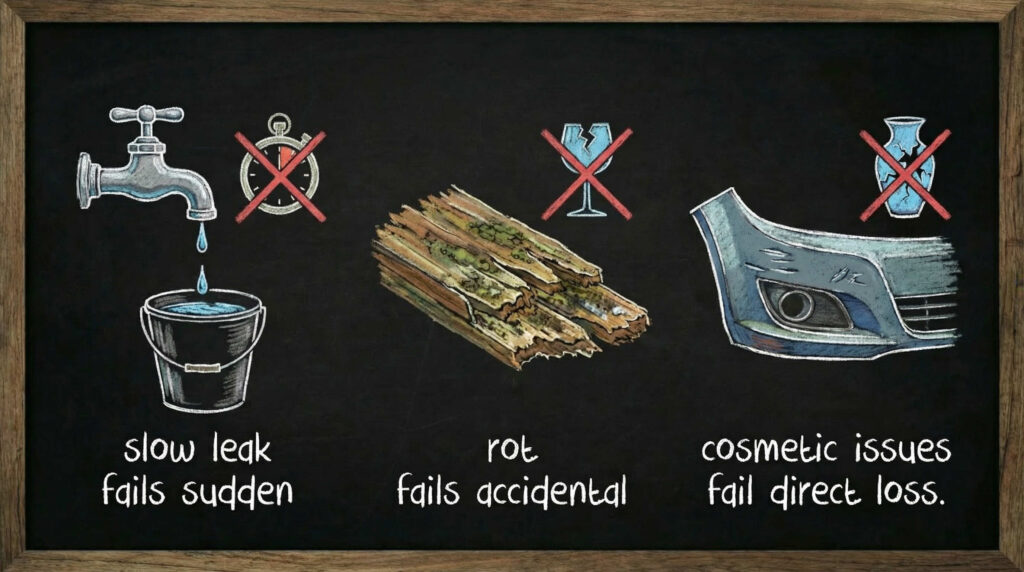
This is why two claims that look similar on the surface can have completely different outcomes.
Once you understand these three matters, insurance stops feeling locked away without knowledge. You can listen to your own situation and almost hear the adjuster’s internal checklist.
And in many cases, you’ll know the answer before the claim is ever filed.
Fire Damage (The Cleanest Coverage)
If there’s one situation where home insurance is most likely to work the way people expect, it’s fire.
Fire damage checks every box insurers look for.
- It’s sudden.
- It’s accidental in most cases.
- And it causes obvious, direct physical loss.
That’s why fire is considered one of the cleanest covered perils in home insurance.
When a fire breaks out – whether from an electrical issue, a cooking accident, or an unexpected malfunction, the cause is usually clear. There’s a defined event. A clear timeline. And visible damage that doesn’t require interpretation.
But coverage doesn’t stop with flames.
Smoke damage is often covered, even in areas the fire never reached. Water damage from firefighters putting the fire out is usually covered as well. In many cases, insurance also covers debris removal, cleanup, and temporary repairs needed to make the home safe.
And if the home becomes unlivable, this is where another important benefit often activates: coverage for temporary housing and living expenses while repairs are made.
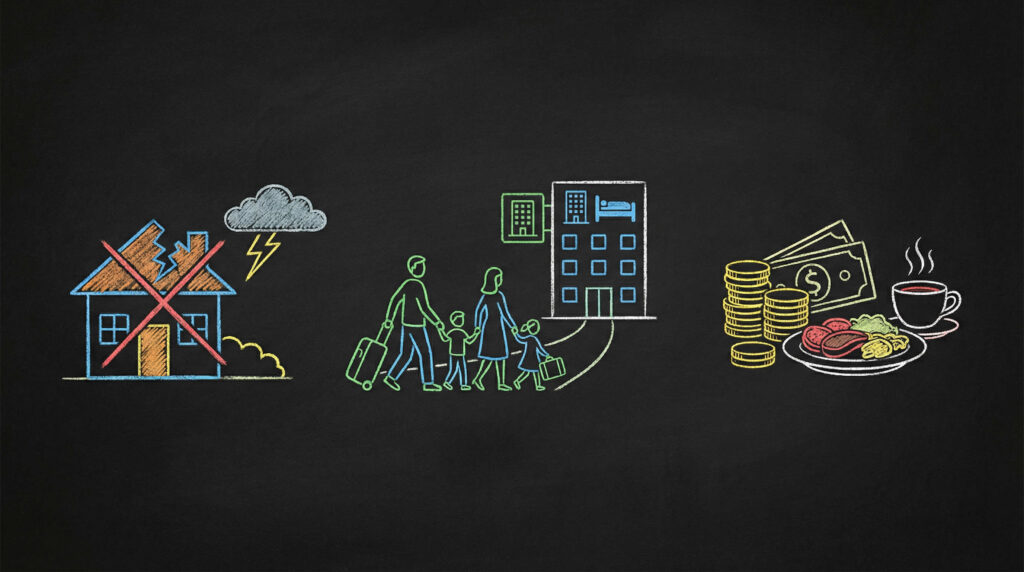
This is why fire claims are often approved faster and with fewer disputes than other types of losses. There’s less room to argue about cause, duration, or responsibility.
Fire represents exactly the kind of sudden, accidental disruption insurance was built for.
And understanding that helps clarify everything else insurance is – and isn’t, designed to handle.
Wind and Storm Damage (When It Qualifies)
Storm damage is where homeowners start to feel confident but then get confused.
Strong winds tear off shingles. Trees fall. Rain pours in. It feels obvious that insurance should pay.
And often, it does pay out. Wind damage is commonly covered when the wind itself causes the opening that lets damage happen. Shingles ripped away by gusts. A tree blown onto the roof. A window shattered by flying debris.
In those cases, the wind is the event – sudden, accidental, and direct.
But problems start when water enters without a qualifying opening.

If rain comes through a roof that was already worn down, insurers may argue the real cause wasn’t the storm but that it was maintenance. If water rises from the ground and enters the home, even during a violent storm, it can be classified as flooding instead of storm damage.
That distinction matters more than the weather itself.
Two houses on the same street can experience the same storm, and only one gets paid. Not because one was hit harder, but because the damage path fits the policy definition.
This is why adjusters focus on entry points, not just destruction. They look for lifted shingles, broken seals, fresh impact marks… evidence that the storm directly caused the damage.
When wind creates the problem, coverage often follows.
When existing weaknesses let damage in, coverage becomes uncertain.
Understanding that difference prevents a lot of frustration and a lot of denied claims.
Burst Pipes and Sudden Water Events
Water damage is one of the most common reasons homeowners file claims, and one of the most misunderstood.
When a pipe bursts suddenly, insurance often responds the way people expect.
- A frozen pipe that ruptures overnight.
- A supply line that fails without warning.
- A fitting that suddenly gives out and floods part of the house.
These situations usually meet the same three criteria: sudden, accidental, and direct physical loss.
But there’s an important distinction most people miss.
Insurance typically covers the damage caused by the water, not the cost to repair the pipe itself. The soaked floors, ruined drywall, damaged cabinets… those are often covered. The broken pipe is usually considered maintenance.
Another critical factor is speed of response.
Once water damage is discovered, insurers expect reasonable action to stop further loss like shutting off the water, calling for cleanup, and preventing additional damage where possible.
All the delays matter however.
If water continues to spread because no action was taken, parts of the damage can be denied, even if the original event was covered.
This is where many claims become partial approvals instead of full ones.
Sudden water events are one of the clearest examples of insurance doing what it’s designed to do, as long as the event is sudden and the response is immediate.
When water moves fast, insurance can too.
Theft and Vandalism (With Limits)
Theft and vandalism are another area where home insurance can work, but only under very specific conditions that need to be understood.
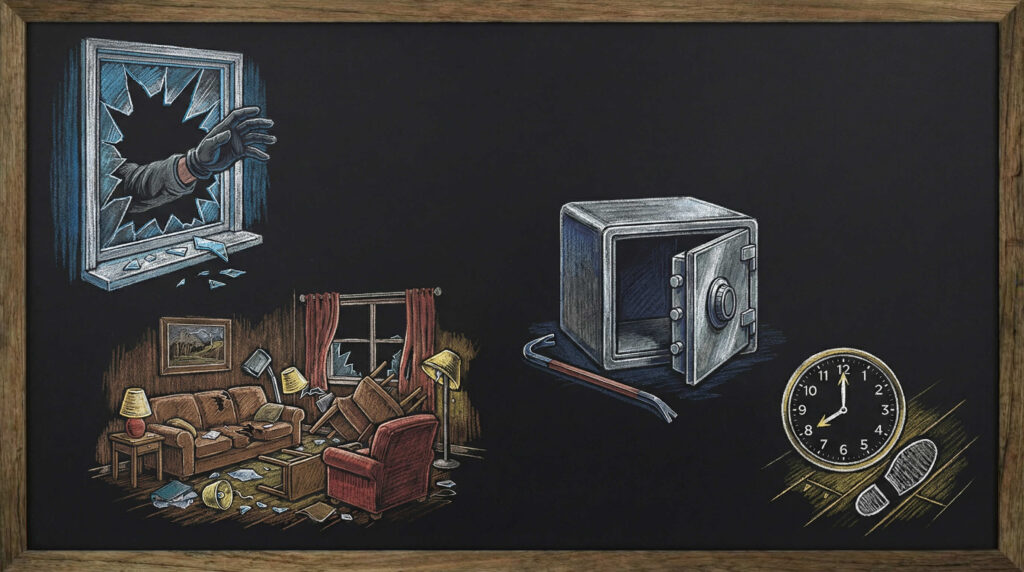
When someone breaks into a home and causes damage or steals property, the event usually qualifies as sudden and accidental. There’s a clear incident, a clear timeline, and visible proof that something happened.
That’s the good news. The limits come in with proof and documentation.
Most policies require evidence of forced entry such as broken locks, shattered windows, damaged doors. Without that, insurers may question whether the loss actually resulted from theft or something else.
Police reports also matter. Filing one doesn’t guarantee approval, but not filing one can seriously weaken a claim. It establishes the event as real, documented, and outside the homeowner’s control.
Then there are monetary sub-limits.
Even when theft is covered, certain categories of items like jewelry, electronics, firearms, or collectibles, may only be covered up to a specific dollar amount unless additional coverage was added beforehand.
Vandalism follows similar rules. Damage caused intentionally by others is often covered, but only when the home wasn’t vacant beyond the policy’s allowed time frame.
So while theft and vandalism are legitimate covered perils, the payout often depends less on emotion and more on evidence, timing, and policy limits.
Insurance may help but only within the boundaries it already set.
Personal Property And When Replacement Happens
This is where expectations and reality often drift the farthest apart.
Most homeowners assume that if personal belongings are damaged or stolen, insurance simply replaces them. In practice, replacement depends on how your policy is written and how well you can prove what you owned.

The first distinction is replacement cost versus actual cash value.
Replacement cost means insurance pays what it costs to buy a similar new item today. Actual cash value subtracts depreciation involving age, wear, and condition. This happens before paying anything out. The difference can be dramatic. A five-year-old television may still work perfectly, but under actual cash value, it’s often worth far less than expected.
Then there’s documentation involved.
Insurance doesn’t replace what you remember owning. It replaces what you can reasonably demonstrate. Receipts help. Photos help. Even old videos taken inside the home can matter more than people realize.
And finally, there are category limits.
Even with replacement cost coverage, certain items may still be capped unless they were scheduled separately. That means full replacement only happens when the policy, the documentation, and the limits all align.
When they do, insurance can work well. When they don’t align, payouts feel smaller and not because the loss wasn’t real, but because the policy was written that way.
Understanding this ahead of time turns personal property coverage from a disappointment into a tool you can actually rely on.
Additional Living Expenses as The Hidden Benefit
One of the most valuable parts of home insurance is also one of the least talked about.
Additional Living Expenses, often called ALE.
This coverage activates when a covered loss makes your home temporarily unlivable. Not inconvenient. Not uncomfortable. Absolutely unlivable.
When that happens, insurance may step in to help cover the extra costs of living somewhere else while repairs are made. Hotel stays. Short-term rentals. Increased food costs. Even basic necessities you wouldn’t normally be paying for.
And this is where many homeowners are surprised and in a good way.
This isn’t about luxury. It’s about maintaining a normal standard of living while your home is being repaired. Insurance compares what you normally spend to what you’re spending because of the loss, and covers the difference all within policy limits.
There are limits though, of course.
Coverage only applies when the original damage is covered. If the claim itself is denied, ALE (all living expenses) doesn’t trigger. There are also time limits and dollar caps, which vary by policy.
But when it applies, ALE can quietly become one of the most helpful benefits in the entire policy – reducing stress at the exact moment life is already disrupted.
It’s a reminder that when insurance works, it doesn’t just fix property. It helps stabilize life around the loss.
Why Valid Claims Still Get Delayed
Even when a claim is legitimate, coverage doesn’t always move quickly.
This is where many homeowners start to worry and sometimes assume a delay means denial. In reality, delays are often part of the normal claims process.
After a loss is reported, insurers need to confirm three things: what happened, when it happened, and whether the policy applies. That takes time. Adjusters review photos, statements, repair estimates, and sometimes third-party reports.

Delays also happen when documentation is incomplete.
Missing receipts. Unclear timelines. Conflicting explanations. Each gap slows the process because insurers can’t approve what they can’t verify.
There are also situations where damage overlaps multiple causes – part covered, part excluded. Those claims take longer because they require separation, estimates, and additional review.
None of this feels good when you’re waiting.
But a pause doesn’t automatically mean the claim will be denied. It often means the insurer is still building the file needed to make a decision that holds up under review.
Understanding this helps homeowners stay patient, organized, and proactive, instead of panicking or assuming the worst before the process finishes.
Know If A Claim Will Likely Be Approved
Before you ever call your insurance company, there’s a quiet decision point most homeowners don’t realize they have.
You can often estimate the outcome of a claim before it’s filed.
Start by separating damage from cause.
The damage might be severe such as soaked floors, broken walls, missing belongings – but insurance doesn’t begin there. It begins with why that damage happened.
Ask yourself a few direct questions.
- Was there a single, identifiable event?
- Did it happen suddenly?
- Was it this actually accidental?
- Is there clear physical damage you can show?
If the answer to most of those is yes, the claim has a strong foundation.
Next, consider timing.
- How long was the issue happening before it was discovered?
- Did you take action once you noticed it?
- Can you reasonably explain the sequence of events?
Finally, think about exclusions.
Does this loss involve flooding, earth movement, long-term wear, or neglect? If so, coverage becomes less likely, even if the damage feels overwhelming.
This kind of mental checklist doesn’t replace reading your policy, but it does something just as important.
It shifts you from reacting emotionally to thinking strategically.
When homeowners understand how claims are evaluated, they file fewer bad claims and handle good ones with more confidence.
And that’s often the difference between frustration and a smoother outcome when insurance is involved.
When Insurance Finally Makes Sense
By this point, something important should feel different.
Insurance no longer sounds random. It no longer feels like a gamble. And it no longer feels personal when claims are approved or denied. Once you understand what insurance is built to cover, patterns start to emerge.
- Sudden events.
- Accidental causes.
- Clear, physical damage.
When those elements are present, insurance tends to work. When they aren’t, frustration usually follows. This happens not because the system failed, but because expectations were misaligned. This is the shift most homeowners never get until after a loss.
Seeing insurance as a rule-based contract, not a safety promise, changes how you prepare, how you respond, and how you decide whether to file a claim at all.
It doesn’t eliminate risk.
But it removes surprise.
And that clarity is what turns insurance from something people fear dealing with into something they can actually use strategically, calmly, and with far less stress.
Knowing when insurance pays isn’t about memorizing policies. It’s about understanding the logic behind them. Once you do, the entire process becomes easier to navigate before something goes wrong, not after something does.
The Final Overall Takeaway
The biggest takeaway here is simple…
Home insurance works best when you understand it before you need it.
You don’t have to memorize your entire policy. You don’t have to become an expert. But knowing what insurance is designed to cover and what it isn’t, puts you in control when something goes wrong.
When you can separate damage from cause, recognize sudden versus gradual problems, and spot common exclusions ahead of time, you avoid filing claims that go nowhere and handle valid ones with confidence.
That alone saves time, stress, and money.
Thanks for reading here and gaining the knowledge. Take a view around some of the other related posts if needing more help or assistance with these issues.
Leave a Reply